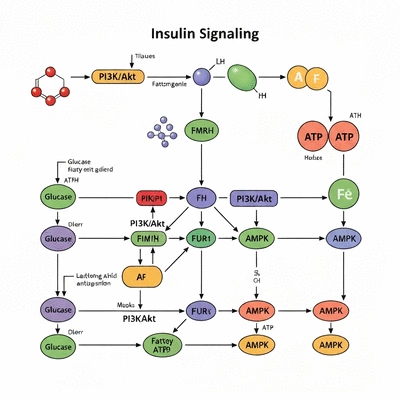
Metabolic State Shift During Fasting
Fasting induces a shift from glucose utilization to fat utilization as the primary energy source.
Exploring the intricate relationship between fasting and insulin pathways reveals fascinating insights that could transform your understanding of weight management. As you venture into this realm, consider how hormonal shifts can redefine your body's approach to energy and fat utilization.
This visual represents the critical metabolic shifts and pathways involved when the body transitions from a fed state to a fasted state, highlighting key hormones and their roles. For a deeper dive into how your body manages energy, consider understanding intermittent fasting and metabolism insights.
Fasting induces a shift from glucose utilization to fat utilization as the primary energy source.
When we talk about fasting, one of the most fascinating areas to explore is insulin signaling pathways. These pathways are critical to understanding how our bodies respond to periods of fasting. They dictate how our bodies store and utilize energy, influencing everything from weight management to metabolic health. Let’s break this down into manageable pieces!
Insulin signaling pathways are the biochemical routes that insulin takes when it interacts with cells in our bodies. Insulin is a hormone that facilitates the uptake of glucose and plays a significant role in fat storage and metabolism. Within this context, we also have two key players: PI3K/Akt and AMPK.
These components work together to regulate our metabolism. When insulin levels are high, the PI3K/Akt pathway is active, leading to fat storage. However, when fasting occurs and insulin levels drop, AMPK becomes more active, encouraging the body to burn fat for energy.
In simple terms, fasting triggers a shift in these pathways. As insulin levels decrease, the body transitions from a state of fat storage to one of fat utilization. This metabolic shift is essential for anyone looking to achieve sustainable weight loss. Think of it as switching gears in a car; when you change gears, the engine responds differently!
Now that we’ve established the basics, it’s important to understand how fasting influences these pathways. Fasting isn’t just about skipping meals; it’s about initiating metabolic shifts that can lead to significant health benefits. For more information on how fasting impacts your body, read about fasting's impact on insulin sensitivity.
By fostering a state of hypoinsulinemia, fasting allows the body to prioritize fat burning over fat storage, which is a key element of effective weight management.
During fasting, another hormone—glucagon—comes into play. Glucagon works in opposition to insulin, signaling the liver to release stored glucose and promoting fat mobilization. It’s like having a partner in a dance, working seamlessly to facilitate the shift from stored energy to usable energy.
When fasting, insulin receptors become more sensitive, enhancing the body’s ability to utilize insulin efficiently when it’s reintroduced. This increased sensitivity is critical for maintaining metabolic health and preventing insulin resistance over time. It’s a vital part of our overall strategy for sustainable weight loss!
In summary, the interplay between insulin signaling pathways and fasting is a fascinating subject that highlights the profound impact fasting can have on our metabolism. At Fasted Intelligence, we dive deep into these mechanisms to help you better understand your body’s responses and achieve your health goals. It's all about equipping ourselves with knowledge to thrive!
To enhance the effects of fasting on your metabolism, consider incorporating resistance training into your routine. Research shows that combining fasting with strength training can amplify fat loss and improve insulin sensitivity, making your fasting efforts even more effective!
As we dive deeper into the relationship between fasting and insulin signaling, it’s essential to grasp how these interactions influence our bodies. I’ve seen firsthand at Fasted Intelligence that understanding these connections can significantly enhance our approach to sustainable weight loss and metabolic health.
In this section, we'll summarize key takeaways that can help clarify how fasting impacts insulin pathways, leading to effective fat loss and improved health outcomes. Here’s what stands out:
The intersection of fasting and insulin pathways is a game changer for weight management. Let's explore some vital points:
Fasting leads to lower insulin levels, which directly correlates with increased fat mobilization. When insulin is lower, our body becomes more efficient at utilizing stored fat for energy. This metabolic shift is essential for anyone aiming to achieve sustainable weight loss.
In addition to fat loss, fasting helps regulate hormones like glucagon, which further supports fat burning. So, when you embark on a fasting regimen, you not only tap into fat stores but also optimize your body's ability to manage energy effectively!
It’s vital to recognize that the benefits of fasting extend beyond immediate fat loss. Engaging in regular fasting can lead to lasting improvements in insulin sensitivity and overall metabolic health, reducing the risk of metabolic syndrome and related diseases.
Moreover, these long-term effects can facilitate weight maintenance, making it easier to keep the weight off once you've lost it. Education is key! By understanding the science behind these processes, you're better equipped to make informed decisions that align with your health goals.
Another important aspect to consider is the concept of nutritional ketosis. When fasting, your body shifts from using glucose to ketones as its primary fuel source. This state not only enhances fat burning but can also improve mental clarity and energy levels.
By combining fasting with a focus on nutritional ketosis, you can maximize your results and take your health journey to the next level. It’s all about creating a sustainable plan that fits your lifestyle!
As you consider incorporating fasting into your routine, I encourage you to take the next steps with a thoughtful approach. Remember, every individual’s journey is unique, and it’s crucial to listen to your body as you experiment with different fasting protocols.
Start with a simple protocol, like the 16:8 method, which allows for a manageable fasting window. Gradually, you can adjust based on your comfort level and personal goals. Here’s a practical action plan to get started:
At Fasted Intelligence, we value community engagement! I invite you to share your fasting experiences, questions, or insights. Engaging with others on this journey not only helps you stay accountable but can also provide valuable perspectives that enhance your understanding.
So, whether you're just starting or have been on this path for a while, let’s continue to learn and grow together! Your journey is unique, and every story shared enriches our community.
Here is a quick recap of the important points discussed in the article:
Jordan Sinclair is a passionate health and wellness advocate dedicated to evidence-based practices in weight management and fasting. With a solid background in nutritional science and health coaching, Jordan excels at translating complex research into clear, actionable insights. Through Fasted Intelligence, he empowers adults on their journey toward sustainable weight loss and improved metabolic health, providing research-backed guidance that cuts through the noise and focuses on what truly works.