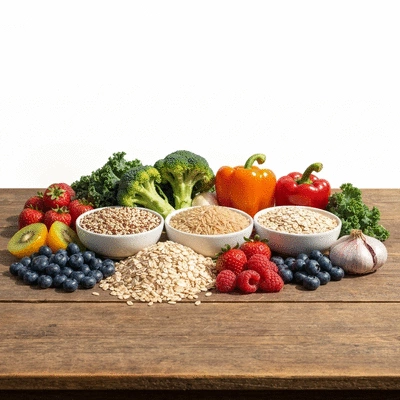
Low-Glycemic Foods (GI ≤ 55)
Digested and absorbed slowly, leading to a gradual and stable increase in blood sugar. High in fiber, promoting satiety and metabolic health.
- Minimizes insulin spikes
- Supports prolonged energy
- Aids in weight management
Recent studies show that managing your blood sugar effectively can significantly impact your overall health. Understanding low-glycemic foods is key to this process, offering a path toward better energy levels and metabolic control. Let's explore the essential insights that can transform your dietary choices!
The glycemic index categorizes foods by their impact on blood sugar. Low-GI foods are crucial for stable blood sugar, weight management, and metabolic health. To delve deeper into how different dietary strategies affect your metabolic well-being, read our article on Fasting or Counting: The Weight Loss Debate.
Digested and absorbed slowly, leading to a gradual and stable increase in blood sugar. High in fiber, promoting satiety and metabolic health.
Quickly digested and absorbed, causing rapid spikes in blood sugar and subsequent insulin surges. Can lead to insulin resistance over time.
As we dive into the realm of blood sugar control, understanding low-glycemic foods is essential. These foods play a significant role in how our bodies process sugars and, ultimately, our overall health. Low-glycemic foods can help keep your blood sugar levels stable, which is a key factor in sustainable weight loss and metabolic health. So, let’s break it down together!
Low-glycemic foods are those that have a lower impact on blood sugar levels compared to high-glycemic foods. The concept of the glycemic index (GI) is valuable here, as it categorizes foods based on how they affect your blood sugar. By incorporating these foods into your diet, you can manage your blood sugar more effectively, which is crucial for anyone interested in maintaining a healthy lifestyle.
The Glycemic Index ranks foods on a scale from 0 to 100 based on their effect on blood glucose levels. Foods that score 55 or less are considered low-glycemic. This means they are digested and absorbed more slowly, leading to a gradual increase in blood sugar levels. Here are some key points to keep in mind:
Understanding this classification can empower you to make informed dietary choices that benefit your health. When you choose low-GI foods, you're also choosing to support your metabolism—a major part of what we promote here at Fasted Intelligence! Intermittent Fasting and Insulin Sensitivity offers further insights into optimizing your metabolic health.
Research shows that the glycemic index directly influences how our bodies manage blood sugar. When we consume high-GI foods, our blood sugar levels spike, prompting a surge of insulin to help regulate it. Over time, this can lead to insulin resistance, weight gain, and metabolic disorders. By contrast, low-GI foods create a more stable blood sugar response, which is crucial for anyone interested in fasting and overall health.
Here’s a quick breakdown of how low-GI foods impact blood sugar:
By choosing foods that are lower on the glycemic index, you are taking an important step toward better blood sugar control and metabolic health!
While the glycemic index is a useful tool, it’s important to consider the glycemic load (GL) as well. Glycemic load takes into account both the glycemic index and the amount of carbohydrate in a serving of food. This provides a more comprehensive view of how a food will affect blood sugar levels. Here are some essential points about glycemic load:
By focusing on both the glycemic index and glycemic load, you can create a diet that not only stabilizes your blood sugar but also supports your fasting efforts. Remember, at Fasted Intelligence, we advocate for evidence-based strategies to help you thrive!
To maximize the benefits of low-glycemic foods, consider pairing them with healthy fats and proteins. This combination not only enhances satiety but also further stabilizes blood sugar levels, making it easier to maintain energy throughout the day.
As we wrap up our discussion on low-glycemic foods, it's clear that they play a pivotal role in both fasting and blood sugar management. These foods, which are digested slowly, help to stabilize blood sugar levels, making them an excellent choice for those looking to enhance their fasting experience. By incorporating low-GI options into your diet, you can enjoy more consistent energy levels and better overall health.
Here are the key benefits of embracing a low-GI diet:
Incorporating these foods into your meals can lead to significant improvements in how your body manages insulin and overall metabolic health. At Fasted Intelligence, we believe that understanding these connections is essential for making informed choices on your health journey.
So, what can you take away from this exploration of low-glycemic foods? First, it's essential to recognize that not all carbohydrates affect your blood sugar equally. Low-GI foods can help maintain stable glucose levels, especially when included in your fasting routine. This means you can enjoy meals that not only taste great but also work in your favor for better health!
Here’s a concise list of practical applications to consider:
Implementing these strategies can provide a solid foundation for achieving your health goals. It’s about creating a balance that works for you. I encourage you to explore these options and witness the positive changes they can bring.
Taking the first steps toward incorporating low-glycemic foods into your diet can feel overwhelming, but it doesn't have to be! At Fasted Intelligence, we advocate for personalized approaches to health, and I’m here to help you navigate this journey. Here are some actionable steps you can take to get started:
Creating a meal plan tailored to your needs is a fantastic way to integrate low-glycemic foods into your daily routine. Begin by assessing your current dietary habits and identifying areas for improvement. Consider what low-GI foods excite you and how you can incorporate them into satisfying meals.
By taking the time to craft a meal plan that resonates with your preferences, you'll enjoy your journey toward better blood sugar control and overall health! For further insights into planning your meals effectively, consider reading our article on Protein Timing for Muscle Preservation.
Don't underestimate the power of collaboration! Engaging with healthcare professionals can provide valuable insights and guidance tailored to your unique needs. Whether it’s a dietitian, a coach like myself, or your primary care provider, these professionals can help you navigate low-GI choices effectively.
Working together can enhance your understanding and foster a supportive environment for lasting change.
Finally, employing blood sugar monitoring can significantly impact your dietary decisions. By regularly tracking your blood sugar levels, you can gain insights into how different foods affect you personally.
This proactive approach empowers you to make informed choices that support your health journey effectively. Remember, small changes can lead to significant outcomes! Learn more about how fasting can impact your hormones and contribute to weight control by checking out our resource on Fasting and Hormones in Weight Control.
Here is a quick recap of the important points discussed in the article:
Jordan Sinclair is a passionate health and wellness advocate dedicated to evidence-based practices in weight management and fasting. With a solid background in nutritional science and health coaching, Jordan excels at translating complex research into clear, actionable insights. Through Fasted Intelligence, he empowers adults on their journey toward sustainable weight loss and improved metabolic health, providing research-backed guidance that cuts through the noise and focuses on what truly works.