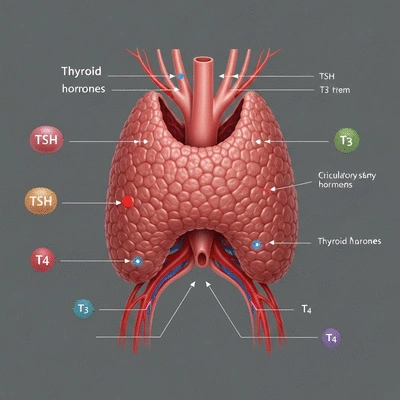
What if the key to unlocking your weight loss journey lies in understanding the intricate relationship between fasting and your thyroid health? This essential gland plays a crucial role in regulating metabolism and energy levels, making it imperative to grasp how fasting interacts with its functions.
What You Will Learn
The thyroid gland produces hormones crucial for regulating metabolism and energy levels, impacting overall health.
Understanding the roles of TSH, T3, and T4 hormones is vital for anyone considering fasting practices.
Fasting can lead to significant hormonal changes that may influence thyroid hormone levels, requiring careful monitoring.
Individual responses to fasting can vary, especially for those with thyroid conditions; personalized approaches are essential for success.
Fasting and Thyroid Health: Key Hormones and Considerations
This visual summarizes the crucial thyroid hormones and essential considerations for adults with thyroid issues when engaging in fasting protocols. For more in-depth information on how various fasting methods impact your body, consider exploring understanding time-restricted feeding.
Key Thyroid Hormones & Their Roles
TSH (Thyroid Stimulating Hormone)
Stimulates thyroid to produce T3 & T4. Secreted by pituitary gland.
T3 (Triiodothyronine)
Active form, influences metabolism; low levels slow energy use.
T4 (Thyroxine)
Precursor to T3; converts to T3, crucial during fasting for metabolism regulation.
Balancing Fasting & Hormonal Health
•Monitor Levels: Regular check-ups with healthcare provider.
•Fasting Type: Different protocols yield different results; choose wisely.
•Nutritional Quality: What you eat during non-fasting periods matters.
Final Thoughts for Adults with Thyroid Issues
•Stay Informed: Knowledge is power; keep up with research.
•Personalize: Find a fasting method that fits your lifestyle.
•Be Patient: Allow your body time to adapt to new protocols.
Important: Consult Healthcare Professionals!
Always seek personalized guidance, especially with underlying health conditions like hypothyroidism, to ensure your fasting approach aligns with your health goals and hormonal balance.
Understanding the Relationship Between Fasting and Thyroid Function
When we talk about sustainable weight loss and metabolic health at Fasted Intelligence, understanding how fasting impacts thyroid function is essential. The thyroid is a small but powerful gland that plays a critical role in our overall health. It produces hormones that control many bodily functions, including metabolism, energy regulation, and even mood. So, why is thyroid function important? Let's break it down!
The thyroid influences how our bodies use energy. It regulates our metabolic rate, which can impact everything from weight management to how we feel throughout the day. When thyroid function is compromised, it can lead to conditions like hypothyroidism, causing fatigue, weight gain, and other health issues. Understanding this relationship is crucial for anyone looking to improve their health through fasting.
What is Thyroid Function and Why is it Important?
The thyroid gland is responsible for producing hormones that affect nearly every organ in the body. It releases three main hormones: TSH (Thyroid Stimulating Hormone), T3 (Triiodothyronine), and T4 (Thyroxine). These hormones help regulate metabolism and energy levels, which is vital for maintaining a healthy body weight. Knowing how these hormones work can empower you to make informed decisions about your fasting practices.
TSH: Stimulates the production of T3 and T4.
T3: The active form of thyroid hormone that influences metabolism and energy.
T4: A precursor to T3, primarily involved in regulating metabolism.
By understanding these hormones and their functions, we can see how important it is to maintain a healthy thyroid. It’s not just about weight loss; it’s about enhancing our overall wellness and energy levels.
The Role of Hormones in Metabolism and Energy Regulation
Hormones act as messengers in our body, signaling various processes necessary for life. In the context of metabolism, thyroid hormones are particularly significant. They dictate how efficiently our bodies convert food into energy. When we fast, our body enters a state of energy conservation, which can impact hormone levels, including those produced by the thyroid. To learn more about how fasting affects overall hormone balance, check out fasting and hormones in weight control.
Understanding Thyroid Hormones: TSH, T3, and T4
To truly grasp the implications of fasting on thyroid health, it’s essential to understand TSH, T3, and T4 in detail:
TSH: Secreted by the pituitary gland, it stimulates the thyroid to produce T3 and T4.
T3: This active hormone affects metabolism; low levels can slow down energy use.
T4: Though less active, it converts to T3 in the body, which is crucial during fasting.
As we delve deeper into how fasting interacts with these hormones, we’ll uncover the mechanisms behind these changes and how they can affect our health and weight loss journey at Fasted Intelligence.
How Fasting Affects Thyroid Hormones: An Evidence-Based Perspective
Fasting isn't just a trendy diet; it’s a method of reshaping our metabolic response. Understanding its effects on thyroid hormones can help us harness its potential benefits. Research has shown that fasting can lead to significant hormonal changes, influencing TSH, T3, and T4 levels. Let’s explore how this works!
Pro Tip
To optimize your fasting experience and support thyroid function, consider incorporating nutrient-dense foods during your eating windows. Foods rich in iodine, selenium, and zinc—such as fish, nuts, and leafy greens—can help maintain hormonal balance and boost your metabolism. Always prioritize quality over quantity!
Frequently Asked Questions About Fasting and Thyroid Health
Q: What is the thyroid gland, and why is it important for metabolism?
A: The thyroid gland is a small but powerful gland that produces hormones (TSH, T3, T4) essential for regulating metabolism, energy levels, and even mood. These hormones dictate how efficiently your body converts food into energy, playing a critical role in overall health and weight management.
Q: How does fasting generally affect thyroid hormone levels?
A: Fasting can lead to significant hormonal changes. While the body enters a state of energy conservation, it can influence TSH, T3, and T4 levels. It's crucial to monitor these changes, especially for individuals with existing thyroid conditions, as responses can vary.
Q: Is it safe for individuals with thyroid conditions to fast?
A: While fasting can offer health benefits, individuals with thyroid conditions, such as hypothyroidism, should exercise caution. It is vital to consult with healthcare professionals before starting any fasting regimen to ensure it aligns with your health goals and maintains hormonal balance. Personalized guidance is key.
Q: What are TSH, T3, and T4, and what are their roles?
A: TSH (Thyroid Stimulating Hormone) is secreted by the pituitary gland and stimulates the thyroid to produce T3 and T4. T3 (Triiodothyronine) is the active form of thyroid hormone influencing metabolism; low levels can slow energy use. T4 (Thyroxine) is a precursor to T3, converting to T3 in the body and is crucial for metabolism regulation.
Q: What are some practical tips for balancing fasting with thyroid health?
A: Key tips include: regularly monitoring hormone levels with a healthcare provider, choosing a fasting protocol that suits your metabolic health, focusing on nutrient-dense foods during non-fasting periods, staying informed with current research, personalizing your fasting approach, and being patient with your body's adaptation process.
Summarizing Key Insights on Fasting and Thyroid Health
As we wrap up our discussion on fasting and thyroid health, it’s clear that understanding this relationship is essential. While fasting can offer various health benefits, particularly for weight management and metabolic function, it’s crucial to balance these advantages with your hormonal health. Each individual’s response to fasting can differ significantly, especially for those dealing with thyroid issues. Let's dive deeper into these insights.
Balancing Fasting Benefits with Hormonal Health
Fasting is not a one-size-fits-all approach. For individuals with thyroid conditions, it’s vital to consider how fasting might influence hormone levels. Here are a few key points to remember:
Monitoring Hormone Levels: Regular check-ins with your healthcare provider can help ensure that your thyroid hormones remain in check while fasting.
Type of Fasting Matters: Different fasting protocols may yield different results; understanding which one suits your metabolic health best is key.
Nutritional Quality: What you eat during non-fasting periods significantly impacts your overall health and hormone function.
Incorporating these considerations into your fasting routine can help optimize both your health goals and thyroid function. Always listen to your body and consult with healthcare professionals when necessary!
Final Thoughts on Fasting for Adults with Thyroid Issues
In my journey at Fasted Intelligence, I've seen firsthand how tailored fasting approaches can empower individuals. If you have thyroid issues, it’s not just about when you eat, but also what you eat. Fasting can be beneficial, but it requires careful attention to hormone regulation and overall nutrition. Here are some final thoughts:
Stay Informed: Knowledge is power. Staying updated on the latest research regarding fasting and thyroid health can provide you with insightful information.
Personalize Your Approach: Every body is unique. It’s essential to find a fasting method that fits your lifestyle and health needs.
Be Patient: Adjusting to a new fasting protocol takes time. Allow your body to adapt and respond at its own pace.
Remember, the journey to wellness is ongoing and learning about how fasting impacts your body is a key part of that journey!
Encouraging Further Exploration and Personalized Approaches
Consulting Healthcare Professionals for Tailored Advice
Before starting any fasting regimen, particularly if you have underlying health conditions like hypothyroidism, it's advisable to consult with healthcare professionals. They can offer personalized guidance, ensuring your fasting approach aligns with your health goals and hormonal balance. This is especially crucial for those of us navigating the complexities of thyroid function. A tailored plan can lead to better outcomes and a more enjoyable experience! For a deeper dive into the metabolic aspects, you might find our article on thyroid hormones and time-restricted eating insightful.
Resources for Further Learning and Support
At Fasted Intelligence, we are dedicated to empowering you with evidence-based knowledge. To further support your journey, here are some valuable resources:
These resources can help deepen your understanding and provide a solid foundation as you explore the interplay between fasting and thyroid health. Remember, you’re not alone on this journey, and with the right knowledge and support, you can achieve your health goals!
Recap of Key Points
Here is a quick recap of the important points discussed in the article:
Understand Thyroid Function: The thyroid gland produces hormones that regulate metabolism and energy use, playing a crucial role in overall health.
Impact of Fasting: Fasting can significantly alter TSH, T3, and T4 hormone levels, affecting metabolic responses.
Monitor Hormone Levels: Regularly check with healthcare providers to ensure that thyroid hormones remain balanced during fasting.
Personalize Your Fasting Approach: Different fasting protocols may yield different results; it’s essential to find the right fit for your unique metabolic health.
Nutritional Quality Matters: Focus on what you eat during non-fasting periods to support hormone regulation and overall health.
Stay Informed: Continuous education on fasting and thyroid health can empower you on your wellness journey.
Jordan Sinclair: Empowering Your Fasting Journey
Jordan Sinclair is a passionate health and wellness advocate dedicated to evidence-based practices in weight management and fasting. With a solid background in nutritional science and health coaching, Jordan excels at translating complex research into clear, actionable insights. Through Fasted Intelligence, he empowers adults on their journey toward sustainable weight loss and improved metabolic health, providing research-backed guidance that cuts through the noise and focuses on what truly works.
Popular Posts
Micronutrients in Regular Fasting
As you embark on your fasting journey, understanding the role of micronutrients can be the key to en
Collagen and Bone Broth Benefits
Many people often overlook the power of bone broth during fasting, but its nutrient-rich profile can
Fasted Intelligence is your evidence-driven authority for sustainable weight loss through fasting and metabolic science. We empower adults with clear, research-backed guidance to optimize health and achieve lasting results.
Start your fasting journey with a 12-hour window, like 7 PM to 7 AM. This gentle introduction helps your body adapt without feeling deprived!
Hydration is key during fasting! Drink plenty of water, black coffee, or unsweetened tea to support metabolic function and reduce hunger.
Focus on nutrient-dense foods during your eating window. Prioritize lean proteins, healthy fats, and fiber-rich vegetables to fuel your body.
Listen to your body. Fasting protocols aren't one-size-fits-all. Adjust your schedule based on how you feel and your individual metabolic response.
Break your fast gently. Opt for easily digestible foods first to avoid overwhelming your digestive system, like a small salad or bone broth.
Incorporate light exercise during your fasting window. Walking or yoga can enhance fat burning and metabolic flexibility without excess strain.
Manage stress effectively. High stress levels can impact hormones like cortisol, which might hinder your fasting progress and metabolic health.
Prioritize quality sleep. Adequate sleep is crucial for hormone regulation and metabolic recovery, making your fasting efforts more effective.
Track your progress beyond just weight. Notice improvements in energy, mental clarity, and digestion as indicators of better metabolic health.
Consider your electrolyte intake, especially during longer fasts. Replenishing sodium, potassium, and magnesium can prevent fatigue.
Educate yourself on the science. Understanding *why* fasting works can strengthen your commitment and help you make informed choices.
Avoid the 'feast-or-famine' mindset. Fasting is about metabolic regulation, not extreme restriction. Balance is key for sustainable results.
Consult with a healthcare professional before starting any new fasting regimen, especially if you have underlying health conditions or are on medication.
Be patient and consistent. Sustainable weight loss and metabolic health improvements take time and dedication. Celebrate small victories!
Include a clear call-to-action in every post. This boosts engagement and guides readers to take the next step towards mastering their fasting journey!