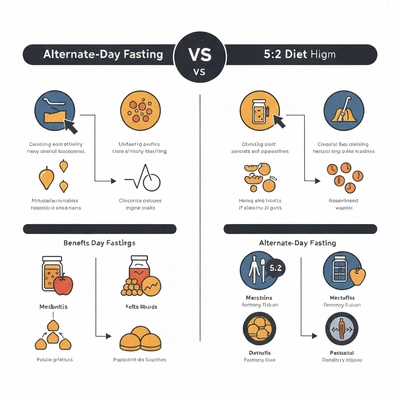
As you contemplate transformative health strategies, consider the powerful potential of fasting. With methods like Alternate-Day Fasting and the 5:2 Diet gaining traction, understanding their nuances can unlock a healthier you.
What You Will Learn
Alternate-Day Fasting (ADF) involves cycling between normal eating days and fasting days, with a caloric intake of around 500 on fast days.
The 5:2 Diet allows for normal eating five days a week, with two non-consecutive fasting days at around 500 calories each, offering flexibility.
Both ADF and the 5:2 Diet can lead to weight loss and improved metabolic health, but ADF may provide quicker results due to greater caloric restriction.
Improved insulin sensitivity is a key benefit of ADF, helping regulate blood sugar levels and potentially reducing the risk of type 2 diabetes.
Focusing on whole, nutritious foods during eating periods maximizes health benefits and enhances the effectiveness of both fasting methods.
Comparing Alternate-Day Fasting (ADF) and 5:2 Diet Benefits
Both Alternate-Day Fasting (ADF) and the 5:2 Diet offer distinct approaches to intermittent fasting, each with unique benefits for weight loss and metabolic health. Below is a comparison of their key features and outcomes. For a deeper understanding of how different fasting methods impact your body, explore intermittent fasting and metabolism insights.
Alternate-Day Fasting (ADF)
●Frequency: Cycles between fasting and normal eating days.
●Fasting Days: ~500 calorie intake.
●Weight Loss: Potentially quicker results due to more substantial calorie restriction.
●Metabolic Health: Strong link to improved insulin sensitivity and lower fasting glucose.
●Other Benefits: Reduced inflammation, improved gut health, increased autophagy.
More intense, potentially faster outcomes.
5:2 Diet
●Frequency: 5 days normal eating, 2 non-consecutive fasting days.
●Fasting Days: ~500 calorie intake.
●Weight Loss: Effective over time, potentially slower pace than ADF.
●Metabolic Health: Offers benefits such as improved cholesterol and blood pressure.
●Other Benefits: Reduced inflammation, improved gut health, increased autophagy.
More flexible, easier to sustain for some individuals.
Understanding the Basics of Alternate-Day Fasting and the 5:2 Diet
Fasting can be a powerful tool for managing weight and improving overall health, and two popular methods are Alternate-Day Fasting (ADF) and the 5:2 Diet. Let’s dive into the basics of these regimens to understand how they work and their potential benefits!
As someone who is passionate about health and wellness, I've seen firsthand how these fasting methods can transform lives. Whether you're looking to lose weight or enhance your metabolic health, understanding these strategies can empower you to make informed decisions.
What is Alternate-Day Fasting (ADF)?
Alternate-Day Fasting (ADF) involves cycling between days of normal eating and days of significant calorie restriction. On fasting days, the goal is usually to consume around 500 calories, while on non-fasting days, you eat normally. It’s a straightforward approach that can fit into various lifestyles! To learn more about how fasting impacts blood sugar, consider reading about intermittent fasting and insulin sensitivity.
Here’s a quick overview of the ADF protocol:
Fasting days: Consume around 500 calories.
Feasting days: Eat normally without calorie restrictions.
Flexible: Adjust fasting and feasting days based on personal preference.
Many people report that ADF helps them lose weight effectively, as it reduces overall caloric intake. But there’s more to it than just weight loss; the mechanisms behind ADF may also influence your metabolic health!
Potential benefits and mechanisms of action
Research suggests that ADF may lead to several health benefits, including improved insulin sensitivity and reduced inflammation. By giving your body regular breaks from food intake, you allow it to focus on repair and maintenance processes. This can enhance metabolic efficiency and support weight management.
Moreover, ADF can help your body better regulate hormones like insulin, which plays a vital role in how we store and use energy. By improving insulin sensitivity, individuals may experience better blood sugar control and reduced risk of type 2 diabetes.
The Role of Insulin Sensitivity in ADF
Insulin sensitivity is key in how our bodies respond to food intake. When we practice ADF, we not only lower insulin levels during fasting days but also help our cells become more responsive to insulin on feast days. This dual action can be a game-changer for those aiming to improve their metabolic health.
In short, ADF isn't just about cutting calories; it's about enhancing your body's ability to manage those calories more effectively!
Exploring the 5:2 Diet: How It Works
Now, let’s explore another popular fasting method—the 5:2 Diet. This approach allows you to eat normally for five days of the week while restricting calorie intake to about 500 calories on the remaining two non-consecutive days. This flexibility makes it appealing to many people!
Here’s how the 5:2 Diet typically works:
Normal eating for five days of the week.
Two non-consecutive days of reduced calorie intake (around 500 calories).
Flexible scheduling: Choose any two days that work for you!
This method empowers individuals to enjoy their favorite meals while still achieving their health goals. It’s all about finding a balance that fits your lifestyle!
Key benefits and metabolic implications
Similar to ADF, the 5:2 Diet may lead to weight loss and improve metabolic health. By creating a caloric deficit over the week, many people find it easier to shed pounds. Additionally, some studies indicate that the 5:2 Diet can improve markers like cholesterol levels and blood pressure.
It's essential to remember that with any fasting regimen, the focus should be on whole, nutritious foods during eating days to maximize health benefits. After all, the quality of what you eat matters just as much as the quantity!
Impact of Nutritional Guidelines on the 5:2 Diet
When engaging with the 5:2 Diet, it’s crucial to consider nutritional guidelines that support overall health. Aim to include:
Fruits and vegetables for vitamins and minerals.
Whole grains for fiber and sustained energy.
Lean proteins to support muscle mass and repair.
By aligning your meals with these guidelines, you can ensure that your body receives the nutrients it needs, even on the reduced-calorie days!
Pro Tip
To maximize the benefits of Alternate-Day Fasting and the 5:2 Diet, focus on incorporating a variety of whole, nutrient-dense foods during your eating days. This not only helps in maintaining energy levels but also ensures your body receives essential vitamins and minerals, enhancing your overall health and weight loss journey.
Summarizing the Key Insights on Fasting Regimens
As we delve into the world of fasting regimens, it's essential to understand the core differences between Alternate-Day Fasting (ADF) and the 5:2 Diet. Each approach has its unique benefits, especially when it comes to weight loss and metabolic health. Let’s summarize the key insights that can guide you toward the best choice for your personal health journey!
Comparative Benefits of ADF and 5:2 Diets
Both ADF and the 5:2 Diet present exciting opportunities for those looking to enhance their health through fasting. Here's a look at their comparative benefits:
Weight Loss Potential: Studies have shown that both diets can lead to significant weight loss; however, ADF may produce quicker results due to more substantial calorie restriction on fasting days.
Metabolic Health Outcomes: ADF has been linked to improved insulin sensitivity and lower fasting glucose levels, while the 5:2 Diet also offers metabolic benefits, though perhaps at a slower pace.
Individual Preferences: Your personal lifestyle and eating habits can significantly influence which diet you find more sustainable. Some might thrive on daily fasting cycles, while others prefer the flexibility of the 5:2 approach.
Thus, understanding these comparative benefits can help you align your fasting regimen with your health goals!
Health Benefits Beyond Weight Loss: Exploring Inflammation and Gut Health
Both fasting regimens offer more than just weight management; they also promote overall health in various ways:
Reduced Inflammation: ADF has shown promise in lowering inflammatory markers, which may help reduce the risk of chronic diseases.
Improved Gut Health: Fasting can enhance gut microbiome diversity, an essential factor in maintaining digestive health.
Increased Autophagy: Both diets can stimulate autophagy, the body's process of cleaning out damaged cells, leading to better cellular health.
By embracing these benefits, you're not just focusing on weight loss but investing in your long-term well-being!
Next Steps: Making an Informed Choice
Now that we've explored the benefits of both ADF and the 5:2 Diet, it’s time to consider your next steps. Making an informed choice is crucial for successful fasting!
Encouraging a personalized approach to intermittent fasting
At Fasted Intelligence, I believe that a personalized approach to intermittent fasting is key to achieving lasting results. Reflect on your daily routine, food preferences, and lifestyle to determine which fasting regimen feels right for you. Remember, it’s not about fitting into a mold; it’s about finding what works best for your unique body!
Call to action: Start your fasting journey with the right information
Are you ready to begin your fasting journey? Equip yourself with the right information and resources! I invite you to explore more articles on our platform, such as Fasting or Counting: The Weight Loss Debate, and consider reaching out for personalized guidance. Together, we can unlock your potential for sustainable weight loss and improved metabolic health!
Recap of Key Points
Here is a quick recap of the important points discussed in the article:
Alternate-Day Fasting (ADF): Involves alternating between days of normal eating and days with a calorie intake of around 500 calories.
5:2 Diet: Allows normal eating for five days, with two non-consecutive days restricted to about 500 calories.
Health Benefits: Both methods can aid in weight loss, improve insulin sensitivity, reduce inflammation, and promote gut health.
Personalization: Choosing the right fasting method should align with individual lifestyle and preferences for sustainable results.
Nutritional Focus: Emphasizing whole, nutritious foods during eating days is crucial to maximize health benefits.
Frequently Asked Questions (FAQs)
What is Alternate-Day Fasting (ADF)?
Alternate-Day Fasting (ADF) is an intermittent fasting method where individuals cycle between days of normal eating and days of significant calorie restriction, typically consuming around 500 calories on fasting days.
How does the 5:2 Diet work?
The 5:2 Diet involves eating normally for five days of the week and restricting calorie intake to approximately 500 calories on two non-consecutive fasting days.
What are the main benefits of ADF and the 5:2 Diet?
Both ADF and the 5:2 Diet can lead to weight loss, improved insulin sensitivity, reduced inflammation, enhanced gut health, and increased autophagy (cellular clean-up process).
Which fasting method is better for weight loss?
Both methods are effective for weight loss. ADF may lead to quicker results due to more substantial calorie restriction, while the 5:2 Diet may be easier to sustain for some individuals due to its flexibility.
Is it important to eat nutritious foods on non-fasting days?
Yes, focusing on whole, nutritious foods during eating periods is crucial to maximize the health benefits and effectiveness of both fasting methods. This ensures your body receives essential vitamins and minerals.
Jordan Sinclair: Empowering Your Fasting Journey
Jordan Sinclair is a passionate health and wellness advocate dedicated to evidence-based practices in weight management and fasting. With a solid background in nutritional science and health coaching, Jordan excels at translating complex research into clear, actionable insights. Through Fasted Intelligence, he empowers adults on their journey toward sustainable weight loss and improved metabolic health, providing research-backed guidance that cuts through the noise and focuses on what truly works.
Popular Posts
Micronutrients in Regular Fasting
As you embark on your fasting journey, understanding the role of micronutrients can be the key to en
Collagen and Bone Broth Benefits
Many people often overlook the power of bone broth during fasting, but its nutrient-rich profile can
Fasted Intelligence is your evidence-driven authority for sustainable weight loss through fasting and metabolic science. We empower adults with clear, research-backed guidance to optimize health and achieve lasting results.
Start your fasting journey with a 12-hour window, like 7 PM to 7 AM. This gentle introduction helps your body adapt without feeling deprived!
Hydration is key during fasting! Drink plenty of water, black coffee, or unsweetened tea to support metabolic function and reduce hunger.
Focus on nutrient-dense foods during your eating window. Prioritize lean proteins, healthy fats, and fiber-rich vegetables to fuel your body.
Listen to your body. Fasting protocols aren't one-size-fits-all. Adjust your schedule based on how you feel and your individual metabolic response.
Break your fast gently. Opt for easily digestible foods first to avoid overwhelming your digestive system, like a small salad or bone broth.
Incorporate light exercise during your fasting window. Walking or yoga can enhance fat burning and metabolic flexibility without excess strain.
Manage stress effectively. High stress levels can impact hormones like cortisol, which might hinder your fasting progress and metabolic health.
Prioritize quality sleep. Adequate sleep is crucial for hormone regulation and metabolic recovery, making your fasting efforts more effective.
Track your progress beyond just weight. Notice improvements in energy, mental clarity, and digestion as indicators of better metabolic health.
Consider your electrolyte intake, especially during longer fasts. Replenishing sodium, potassium, and magnesium can prevent fatigue.
Educate yourself on the science. Understanding *why* fasting works can strengthen your commitment and help you make informed choices.
Avoid the 'feast-or-famine' mindset. Fasting is about metabolic regulation, not extreme restriction. Balance is key for sustainable results.
Consult with a healthcare professional before starting any new fasting regimen, especially if you have underlying health conditions or are on medication.
Be patient and consistent. Sustainable weight loss and metabolic health improvements take time and dedication. Celebrate small victories!
Include a clear call-to-action in every post. This boosts engagement and guides readers to take the next step towards mastering their fasting journey!