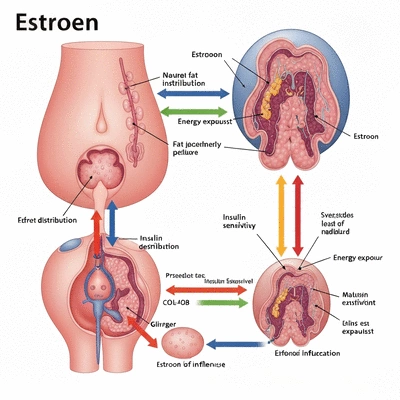
Estradiol's Influence on Metabolism
- Regulates fat distribution
- Enhances insulin sensitivity
- Increases energy expenditure
Core Mechanism
Did you know that estrogen plays a crucial role not only in reproduction but also in metabolic regulation? Understanding this connection can significantly enhance your approach to weight management and fasting strategies.
Estradiol, the most abundant form of estrogen, significantly impacts metabolic health by influencing fat distribution, insulin sensitivity, and appetite. It interacts with other key hormones to create a delicate balance essential for weight management.
When we talk about metabolic regulation, estrogen plays a pivotal role, particularly in its most abundant form, estradiol. This complex hormone influences how our bodies manage energy, control weight, and adapt to changes in our diet and lifestyle. At Fasted Intelligence, we believe understanding these hormonal dynamics can help you navigate your weight loss journey more effectively!
Estrogen isn't just a reproductive hormone; it also impacts our metabolism in significant ways. For instance, it regulates fat distribution, enhances insulin sensitivity, and even modulates our appetite. By grasping how estrogen works, you can better tailor your fasting protocols and nutritional strategies for sustainable weight management. For a deeper dive into optimizing your metabolic health, explore our article on intermittent fasting and insulin sensitivity.
Estrogen, particularly estradiol, is essential for maintaining metabolic health. Here are some key ways it influences metabolism:
Understanding these mechanisms can empower you to optimize your fasting approach. For example, if you are aware of how estrogen affects your insulin levels, you might adjust your eating window to better align with your body’s natural rhythms.
Estradiol plays a direct role in appetite modulation, which is essential for successful weight loss. Here are a few important mechanisms:
By understanding these mechanisms, you can better navigate your cravings and eating habits. For instance, if you notice increased hunger during certain phases of your cycle, you might adapt your fasting schedule accordingly to help manage those urges. This can be especially helpful when considering various time-restricted feeding methods.
Estrogen doesn’t work in isolation. It interacts with other hormones, creating a delicate balance that affects your appetite and energy levels. Consider these interactions:
By recognizing how these hormonal interactions work, you can create a more effective fasting strategy. For example, if you're aware of how estradiol affects your hunger hormones during fasting, you can plan meals accordingly to optimize your energy levels and satisfaction.
Fasting is not just about caloric restriction—it's a powerful tool that can alter hormonal landscapes in our bodies. At Fasted Intelligence, we emphasize understanding these hormonal responses to make informed decisions on your fasting journey.
How has your experience with fasting influenced your understanding of hormonal dynamics? Share your thoughts below:
As we explore the intersection of fasting and hormonal health, it’s essential to consider the unique needs of women across different reproductive stages. At Fasted Intelligence, we believe that understanding these nuances is crucial for effective and safe fasting practices. So, let’s dive into some practical recommendations that clinicians can apply.
When advising clients on fasting, it’s important to tailor protocols to their reproductive status. Here are some guidelines to consider:
By recognizing these stages, clinicians can provide tailored fasting protocols that promote metabolic health without compromising hormonal balance. This personalized approach is key to achieving optimal results, much like understanding the nuances of fasting versus calorie counting for weight loss.
It’s also vital to consider how hormone replacement therapy (HRT) and other estrogen therapies may interact with fasting protocols. Research suggests that:
Incorporating these factors can lead to more effective and personalized fasting strategies for women.
Fasting can play a significant role in managing inflammation and maintaining hormonal balance, which are critical for improved metabolic health. Here’s how fasting helps:
At Fasted Intelligence, we advocate for fasting as a tool not only for weight management but also for fostering hormonal equilibrium.
As we conclude this section, it's clear that navigating the complexities of estrogen and fasting requires a comprehensive understanding of individual needs. The need for further research in this area is evident, paving the way for enhanced clinical practices.
While significant progress has been made, several gaps in research still need addressing, including:
By focusing on these areas, we can further enhance our understanding of the interplay between fasting and metabolic health.
We encourage you to stay engaged with ongoing research and developments in this field! At Fasted Intelligence, we are committed to keeping our community informed. Consider how the insights shared today can apply to your health and wellness strategies. Let’s embrace this journey together!
Here is a quick recap of the important points discussed in the article:
A: Estrogen, particularly estradiol, impacts metabolic health by regulating fat distribution, enhancing insulin sensitivity, and increasing energy expenditure. It helps the body manage energy more efficiently and influences where fat is stored.
A: Yes, estradiol plays a direct role in appetite control by interacting with the hypothalamus (the brain region controlling hunger), modulating appetite hormones like leptin and ghrelin, and regulating neurotransmitters linked to mood and appetite.
A: Fasting protocols should be tailored: pre-menopausal women may benefit from shorter fasting windows (e.g., 14-16 hours) to minimize hormonal disruptions. Perimenopausal women can gradually increase fasting periods while monitoring symptoms, and post-menopausal women might consider longer fasting windows, ensuring adequate nutrient intake for bone health.
A: Fasting can significantly reduce markers of inflammation, which contributes to improved insulin sensitivity. It also encourages cellular repair mechanisms and modulates stress hormones, creating a more favorable environment for overall hormonal balance and metabolic health.
A: Hormone replacement therapy (HRT) and other estrogen therapies can enhance the metabolic benefits of fasting, especially in post-menopausal women. Women on these therapies might experience different fasting outcomes, necessitating personalized adjustments and regular monitoring of hormonal levels.
Jordan Sinclair is a passionate health and wellness advocate dedicated to evidence-based practices in weight management and fasting. With a solid background in nutritional science and health coaching, Jordan excels at translating complex research into clear, actionable insights. Through Fasted Intelligence, he empowers adults on their journey toward sustainable weight loss and improved metabolic health, providing research-backed guidance that cuts through the noise and focuses on what truly works.